


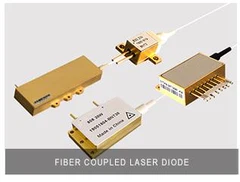
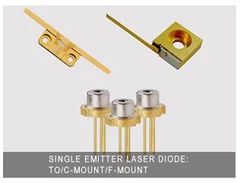


1725nm Fiber Coupled Diode Laser For Medical Application
Features:
- High Stability CW Output
- Supports SM / PM / MM fiber options
- Low Noise & Long Lifetime
Applications:
- Biomedical Spectroscopy
- Gas Sensing & Environmental Monitoring
- Chemical Analysis & Material Identification

The core medical value of the 1725nm laser lies in its energy being highly absorbed by water within tissues. Since human soft tissues inherently contain substantial water content, this laser delivers energy with exceptional precision to target tissues. It induces localized heating to vaporize and ablate tissue while minimizing excessive thermal damage to surrounding structures. This makes the 1725nm laser particularly suitable for medical scenarios requiring "removal of diseased tissue while minimizing damage to healthy tissue."
Compared to common 1064nm or 1470nm lasers, the 1725nm wavelength's absorption peak lies closer to water's strong absorption zone. Consequently, it penetrates shallower, exhibits reduced thermal diffusion, and delivers sharper tissue demarcation. Simply put: - 1064nm heats deeper tissues, often causing larger thermal effects - 1470nm excels at coagulation - 1725nm is better suited for precise ablation, allowing controlled depth while preserving tissue integrity.

Specific Clinical Mechanism of Action:
When 1725nm laser energy is applied to hydrated tissue, the tissue water rapidly absorbs the laser energy, causing a localized temperature increase within an extremely short timeframe. Upon reaching a specific threshold temperature, the tissue undergoes micro-vaporization-the process of "evaporating" or decomposing excess or diseased cellular structures. Simultaneously, surrounding tissues experience a slight temperature increase without reaching vaporization, producing a mild coagulation effect that reduces bleeding and exudation. Consequently, the tissue response to 1725nm laser typically manifests as:
Micro-ablation: Precise removal of target tissues such as hyperplasia, superficial lesions, and keratinized structures.
Mild coagulation hemostasis: Minimal intraoperative bleeding and clear surgical visualization.
Gentle stimulation of tissue repair: Collagen fibers in the superficial dermis rearrange postoperatively, promoting smoother wound healing.
This integrated effect of "ablation + coagulation + repair enhancement" represents a significant advantage of the 1725nm laser in procedures involving sensitive areas.
Clinical Applications:
In dermatology and aesthetic medicine, the 1725nm laser is effective for removing superficial lesions such as moles, warts, skin tags, and hyperkeratosis. Its minimal thermal diffusion results in thin scabs, faster recovery, and less noticeable scarring. For skin texture improvement, it stimulates collagen remodeling in the superficial dermis, reducing the appearance of pores and fine lines. Compared to skin resurfacing lasers, the 1725nm laser offers more controllable tissue damage depth, making it ideal for areas like the face and neck where efficacy is desired but side effects must be avoided.
In ENT and oral medicine, the 1725nm laser is used for procedures like turbinate reduction, tonsillar crypt cleaning, and mucosal hyperplasia treatment. Its shallow ablation depth and high tissue preservation rate allow symptom improvement while maintaining normal tissue structure and function. For instance, in treating turbinate hypertrophy, it reduces mucosal volume without compromising the fundamental function of the mucosal epithelium. This achieves therapeutic outcomes that "improve breathing without affecting the physiological regulation of the nasal cavity."

Other medical applications of 1725nm fiber coupled diode laser:
1. Photothermal Skin Therapy (Selective Fat Heating)
The 1725nm wavelength exhibits peak absorption in skin precisely within the range where fat absorbs highly while water absorbs relatively weakly. Therefore:
It precisely targets the subcutaneous fat layer rather than the epidermis or deeper tissues.
It can be used for facial contouring, double chin reduction, facial sagging management, and localized body fat sculpting.
Its effects are gentler, with fewer side effects and a shorter recovery period, making it a more user-friendly alternative to liposuction and highly invasive laser devices.
2. Sebaceous Gland Regulation Therapy for Acne
Sebaceous glands are essentially lipid-rich microglands. The 1725nm wavelength selectively absorbs and heats lipids:
• Inhibits excessive sebum production
• Reduces oil blockages and acne inflammation
• Particularly effective for hormonal/recurrent acne
Post-treatment, no excessive damage or noticeable scabbing occurs.
3.1725nm can help:
Avoid uneven localized fat deposits
Create more natural and smooth contour lines
Maintain long-lasting refined results
We would like to inform you that we now have the 1725nm fiber-coupled diode laser available.
This wavelength is particularly suitable for applications such as selective fat absorption, skin treatment, biomedical research, and optical testing.
If you have any ongoing projects or new requirements related to this wavelength, please feel free to contact us at any time. We will be happy to provide specifications, samples, and pricing support.
