


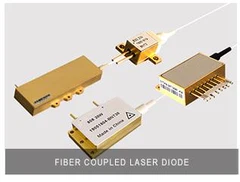
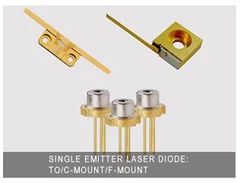


Vertical Stacked Laser Diode
BrandNew: Your Professional Laser Diode Manufacturer!
Extensive product line
Founded in 2011, Professional Laser diode supplier, manufactures high-power diode lasers and systems in a wide range of output powers and wavelengths including laser chip, fiber coupled laser diode, single bar and high power diode laser array.
Quality Assurance
BrandNew pursues high quality, high efficiency, and high standard testing process to ensure that each product is tested at every level before shipment, and we strive to deliver perfect products to our customers, providing customers with a pleasant shopping experience and usage experience.
Customized Service
BrandNew designing and manufacturing a wide range of configurable and custom laser diode modules for machine vision, medical equipment, security, 3D printing, UV curing, and many other challenging applications.
24H Online Service
BrandNew Company offers 24-hour online support for advanced laser diode solutions. The BrandNew sales team has rich knowledge reserves and can help customers solve problems professionally.


What Is Vertical Stacked Laser Diode?

Vertical stacked laser diode consists of numerous diode laser bars arranged vertically, each operating in series. This arrangement allows for a smaller footprint and a more compact design. Furthermore, beam shaping optics can be attached to the diode stack for beam shaping and collimation lenses to focus the individual output beams into a single high power output beam (as in direct diode lasers).
Macro Channel
Micro Channel
VCSEL Stack
The Feature of Vertical Stacked Laser Diode
Compact Design
Vertical Stacking allows for a more compact arrangement of laser diodes, enabling higher power density in a smaller space.
01
High Power Output
Vertical stacked laser diodes are often used to achieve higher total power output by combining the outputs of multiple laser diodes. This is useful in applications where a high-power laser beam is required.
02
Efficient Heat Dissipation
Vertical stacking can facilitate efficient heat dissipation, as the heat generated by each diode can be conducted away through the stack structure. This is crucial for maintaining stable performance and reliability.
03
Uniform Beam Quality
The design of Vertical stacked laser diodes can contribute to better beam quality, ensuring a more uniform and focused laser beam output. This is important in applications such as laser cutting and materials processing.
04
The Application of Vertical Stacked Laser Diode
The Vertical stacked laser diodes from BrandNew are high-power, actively cooled laser stacks with collimation, designed for applications such as pumping solid-state and fiber lasers, material processing, and Vertical stacked laser diodes are key components used for laser hair removal, laser skin resurfacing, wrinkle reduction and ophthalmology, photodynamic therapy to name a few.
What does the Vertical Stack laser array do and how does it work?
Vertical Stack laser array works by using semiconductor science and a special semiconductor material to produce laser light. In a laser diode, this material is made in such a way that there are more excited electrons than relaxed electrons, causing the excited electrons to laser when Vertical Stack laser array calm down. This creates a focused monochromatic light called a laser. The word "diode" in "laser diode" means that it is made like a certain basic semiconductor device, called a p-n junction diode, by arranging two semiconductor materials together in a special way to create the right conditions for lasing. Vertical Stack laser array is like a group of laser diodes working together in a package or array. Vertical Stack laser array setup makes the combined laser stronger and more powerful. Vertical Stack laser array are important devices that use optical gain media and resonant cavities to produce light. The design of these components is critical to modern lasers. Shown is a schematic of a laser cavity, including an optional mode-selective filter for the cavity modes. Vertical Stack laser array the gain medium absorbs radiation but can amplify it using input energy, thus producing light. The resonant cavity supports multiple modes, and if the gain overcomes the losses, the mode reaches threshold and emits coherent light.
For what applications are Vertical Stack array diode laser of different wavelengths used?
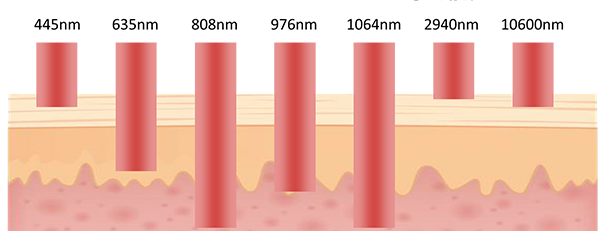
Laser diodes typically operate in the near-infrared to visible spectrum, with wavelengths of approximately 400 to 2000 nanometers (nm). This wavelength range is useful for a variety of applications that require a specific color of light emission. It is worth noting that specialized laser diodes can also be used outside of this range for specific industrial, scientific, and medical purposes.
Take the 808nm Vertical Stack array diode laser as an example:
An 808nm Vertical Stack array diode laser refers to a specific type of laser diode that emits light at a wavelength of approximately 808 nanometers (nm). This falls into the near-infrared region of the electromagnetic spectrum. 808nm Vertical Stack array diode laser represents the wavelength of the laser output. 808nm Vertical Stack array diode laser that emit at this wavelength have a variety of applications, including medical procedures, material processing, telecommunications, and scientific research. In the medical field, 808nm Vertical Stack array diode laser is often used in dermatology for hair removal and skin treatments due to their ability to be absorbed by melanin in hair follicles and skin tissue. In addition, these 808nm Vertical Stack array diode laser are used in laser pumping systems, and their specific wavelength is well suited for certain types of solid-state lasers.
How much power can be used with 808nm Vertical Stack array diode laser?
The 808nm Vertical Stack array diode laser semiconductor laser module product is designed for Vertical Stack array diode laser hair removal applications. 808nm Vertical Stack array diode laser can provide up to 10 laser bars in a vertical stacked package to form a high-power laser output, with the highest single-bar laser continuous light output power of 100W. This 808nm Vertical Stack array diode laser adopts high-density laser bar stacking technology with small bar spacing, so that the module can obtain high-brightness laser output while maintaining a small size, providing efficient operation. 808nm Vertical Stack array diode laser output power up to 1000W Compact package, efficient heat dissipation design Indium-free package provides higher reliability Macro channel water cooling, no special water quality requirements. In order to comprehensively improve the performance and power of high-power semiconductor lasers, double-sided heat dissipation technology is used to optimize the thermal management and thermal design of high-power semiconductor laser vertical stacks and single-bar devices, so that the power of 808 nm single-bar semiconductor lasers in continuous wave operation mode reaches 100 W; the power of 808 nm 20 bar vertical stacks reaches 2000W. In general, we have 760nm, 808nm,976nm, 1064nm stacked array, can be arbitrarily matched into two-wave or three-wavelength, three-wavelength stacked array is currently more in the market, such as 808nm, 976nm, 1064nm such as matching, or 760nm, 808nm,976nm, 1064nm such as four-wavelength our company. We also have, the power is generally in the 300W to thousands of watts ranging from 500W, 600W, 800W, 1000W, 1200W and so on.
What are the processes for making Vertical Stack array diode laser?
The first step in the production of Vertical Stack array diode laser is to design a chip according to the desired function and make the chip into a wafer. As the wafer is repeatedly arranged by the chip, when we look at the completed wafer, you can see that there are many small lattice-like structure, where a small lattice is equivalent to a chip. The larger the chip volume, the smaller the number of chips that can be produced per wafer, the electronic packaging technology and the hardware structure of the device, the electronic packaging technology covers a wide range, and then the attached chips and modules of the circuit card installed on the system board. Broadly speaking, the entire process is often referred to as “packaging” or “assembly”. However, in the semiconductor industry, Vertical Stack array diode laser semiconductor packaging generally involves only the wafer dicing and chip-level packaging processes.

Are Vertical Stack laser array continuous lasers?
Vertical Stack laser array can work either continuously or in pulsed mode, which mainly depends on the choice of its working mode and application requirements. Continuous Wave Vertical Stack laser array can output laser for a long time and stably, and its output power is stable. Common continuous semiconductor Vertical Stack laser array wavelengths include 808nm, 976nm, 1310nm, 1450nm, 1625nm, etc. Pulse semiconductor Vertical Stack laser array output laser in the form of pulses, and their peak power is usually high, but the average power is low. Common pulse semiconductor laser wavelengths include 905nm and 1550nm, etc., with a peak power of about tens of watts. Laser pulses can be very short, such as the "picosecond" level, which means that the pulse time is in the order of picoseconds, and 1 picosecond is equal to one trillionth of a second (10E-12 seconds). The continuous Vertical Stack laser array pump source continuously provides energy and generates laser output for a long time, thereby obtaining continuous laser. The output power of continuous lasers is generally low, which is suitable for occasions that require continuous Vertical Stack laser array operation (such as laser communication, laser surgery, etc.). Continuous lasers also have advantages. After frequency stabilization, a very narrow line width can be obtained, which can be used for laser ranging and fine spectroscopy.
What‘s the difference between micro channel and macro channel Stack array?
1. Micro-Channel Vertical Stack laser array - active cooling mode
The water channels Vertical Stack laser array and water strips on the heat sink are very close, generally around 0.15-0.2 mm, so the thermal resistance is small and the heat dissipation efficiency is high. The Vertical Stack laser array monolithic device has high power capability (100W or higher for continuous wave operation and 700W for quasi-continuous wave operation). In addition, the Vertical Stack laser array heat sink acts as a positive electrode and requires high-quality cooling water such as deionized water.
2. Macro-channel Vertical Stack laser array heat dissipation - active cooling mode
The preparation of the Macro-channel Vertical Stack laser array heat sink can be simplified, and the spacing between the water channel and the strip heat sink can be slightly wider, usually more than 0.2 mm. The Macro-channel Vertical Stack laser array water channel usually has through holes or specialized tooth structures designed to increase the exchange surface area. Macro-channel Vertical Stack laser array structures such as depilatory modules, DPL modules, and 10,000-watt ring bars belong to this category. Macro-channel Vertical Stack laser array Heat sinks with water channels are usually not used as conductive media and do not require very high quality.
What can be treated with Vertical Stack laser array?
1: Vertical Stack laser array hair removal is a non-invasive modern hair removal technology that can safely, quickly and permanently remove excess hair from the body. Vertical Stack laser array hair removal is based on the theory of selective photothermal action, allowing Vertical Stack laser array of specific wavelengths to penetrate the epidermis without damaging the epidermal hair follicles. The melanin in the hair shaft selectively absorbs the Vertical Stack laser array energy, and the hair follicles are heated and coagulated and necrotic, and the hair no longer grows.
2: Picosecond scar repair is a method of using Vertical Stack laser array to treat scars. The Vertical Stack laser array releases a high-energy light to treat the scar area, which can effectively remove scars, lighten pigmentation, and stimulate collagen regeneration.
3: Periodontal disease is a chronic oral disease caused by bacterial infection. Vertical Stack laser array treatment of periodontal disease is very simple and quick. Due to its bactericidal effect, Vertical Stack laser array treatment can reduce the number of bacteria that usually enter the blood during surgery.
What is the proper way to use a Vertical Stack laser array?
The correct method of use Vertical Stack laser array is: the vertical stack laser array shaping lens is a cylindrical lens. The area of the Vertical Stack laser array input surface is smaller than the area of the laser output surface of the light-guiding crystal. The light-guiding crystal is a regular quadrangular prism, and the small end face of the regular quadrangular prism of the light-guiding crystal is adjacent to the output end of the semiconductor laser. The angle between the waist of the side surface of the isosceles trapezoid and the bottom edge adjacent to the laser shaping lens is greater than 110°, which is a vertical stacked semiconductor laser. The side surface is coated with a full reflection film. The cooling device includes a metal cooling seat installed outside the light-guiding crystal, and the metal cooling seat is detachably mounted with a metal cold compress head located at the light-emitting end of the light-guiding crystal. The cooling device also includes a cooling device for cooling the metal cooling seat. The metal cooling seat is a copper cooling seat, Vertical Stack laser array‘s metal cold compress head is copper, and the length and width of the outer end surface of the cold compress head are respectively greater than the length and width of the light output end of the light guide crystal.
How to use the Vertical Stack laser array life longer?
1:Keeping Vertical Stack laser array cool
Another important factor is the temperature control capability of the projector itself, i.e. the cooling system. Efficient cooling is required. Active cooling cycles provide more efficient heat dissipation. In addition to the hardware, when the ambient temperature of the machine room is too high, the light output power can be automatically adjusted to reduce to avoid overloading the laser light source.
2:Vertical Stack laser array drive strength
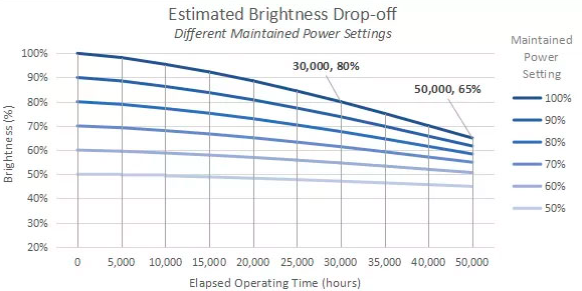
Vertical Stack laser array drive strength is a more complex factor. The higher the power of daily operation, the faster the decay rate. For example, in a machine room temperature environment of 25℃, if the Vertical Stack laser array is always working at 100% full power, then after 30,000 hours of operation, its brightness will decay to 80% of the initial maximum brightness.
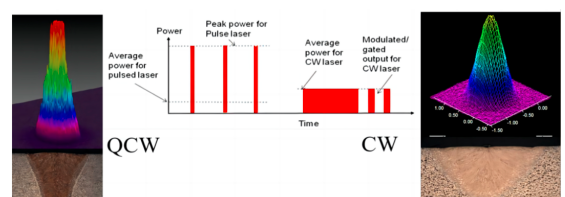
What is the difference between QCW and CW Vertical Stack laser array?
CW Vertical Stack laser array , which translates as “Continuous Wave”, refers to devices that provide uninterrupted laser output during operation. CW Vertical Stack laser array is known for their lower peak power and higher average power. When performing process tuning of CW Vertical Stack laser array, there are several key parameters to focus on, including the power waveform, the amount of defocus, the core diameter of the spot, and the processing speed. Precise adjustment of these parameters is essential to achieve optimal processing results and to ensure high efficiency and quality of the laser process.
QCW Vertical Stack laser array diode laser, or “Quasi-Continuous Wave” lasers, work by emitting the laser light in an intermittent pattern. The energy distribution of QCW Vertical Stack laser array diode laser is more concentrated, which means that they have a higher energy density, which results in greater penetration. In metallurgy, this energy distribution creates a “peg” shaped melt pool of greater depth and width, giving QCW Vertical Stack laser array diode laser a significant advantage in the processing of highly reflective alloys, thermally sensitive materials and micro-connections.
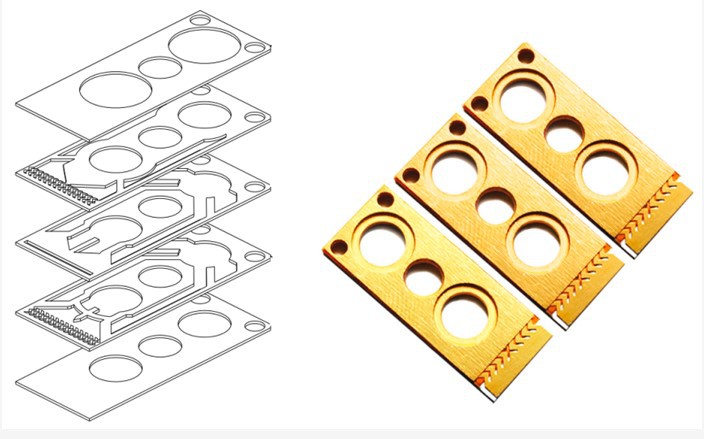
What's the difference between micro channel and macro channel
Micro channel is a kind of diode laser bar heat dissipation way. It is like a man lying down on the ice with a full-body surface to cool- down. You can see from the following micro channel heat-sink. There are several layers of holes to make the heat dissipation. So with the micro channel way, the diode laser stack can work well and have no burning problems. Usually, we imported this kind of heat sink from Germany with good quality and the waterway way with high precision.
Macro channel is another way for diode laser bar heat-dissipation. It is like a man standing on the ice with his feet surface cooling down. It can not be compared with a micro channel cooling stack. But also this kind of diode laser stack with some holes inside for water recycling. You see diode laser bars are mounted on a big stack of metal with covered copper directly. They can not fully contact the waterway 100%. So water cooling is not easy. Also, this kind of stack calls for high profession to do the holes for cooling too especially for the waterway design.
Precautions For The Use Of Laser Diodes
The laser light emitted from this Device is invisible and will harmful to the human eye. Avoid looking directly into the fiber output or into the collimated beam along its optical axis when the device is in operation. Proper laser safety eyewear must be worn during operation.
Absolute Maximum Ratings may be applied to the Device for short period of time only. Exposure to maximum ratings for extended period of time or exposure above one or more max ratings may cause damage or affect the reliability of the Device.
Operating the product outside of its maximum ratings may cause device failure or a safety hazard. Power supplies used with the device must be employed such that the maximum peak optical power cannot be exceeded. A proper heat sink for the Device on thermal radiator is required, sufficient heat dissipation and thermal conductance to the heat sink must be ensured.
The Device is an Open-Heat sink Diode Laser; it may be operated in clean room atmosphere or dust-protected housing only. Operating temperature and relative humidity must be controlled to avoid water condensation on the laser facets. Any contamination or contact of the laser facet must be avoided.
ESD PROTECTION – Electrostatic discharge is the primary cause of unexpected product failure. Take extreme precaution to prevent ESD. Use wrist straps, grounded work surfaces and rigorous antistatic techniques when handling the product.
Order process

Our Certificate

Our Clean Room


Hangzhou Brandnew Technology Co., Ltd. is one of the leading vertical stacked laser diode manufacturers and suppliers in China, has a professional factory which manufacturers high quality vertical stacked laser diode and sells at competitive price. Welcome to wholesale our products made in China.
, Macro-Channel Diode Laser , Macro-Channel Diode Laser China , Stack Bar Diode Laser , Stack Bar Diode Laser factory , Stack Bar Diode Laser China , Vertical Array Diode Laser , Vertical Stack Diode Laser