


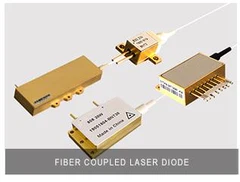
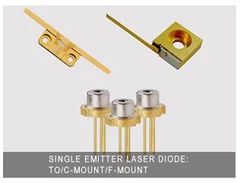


VCSEL Laser Diode
BrandNew: Your Professional Laser Diode Manufacturer!
Extensive product line
Founded in 2011, Professional Laser diode supplier, manufactures high-power diode lasers and systems in a wide range of output powers and wavelengths including laser chip, fiber coupled laser diode, single bar and high power diode laser array.
Quality Assurance
BrandNew pursues high quality, high efficiency, and high standard testing process to ensure that each product is tested at every level before shipment, and we strive to deliver perfect products to our customers, providing customers with a pleasant shopping experience and usage experience.
Customized Service
BrandNew designing and manufacturing a wide range of configurable and custom laser diode modules for machine vision, medical equipment, security, 3D printing, UV curing, and many other challenging applications.
24H Online Service
BrandNew Company offers 24-hour online support for advanced laser diode solutions. The BrandNew sales team has rich knowledge reserves and can help customers solve problems professionally.


What is VCSEL Laser Diode?

A vertical-cavity surface-emitting laser is a semiconductor laser diode that emits a laser beam vertically from its top surface, in contrast to conventional edge-emitting semiconductor lasers (also called planar lasers), which emit from the surface of individual chips cut from a wafer. VCSELs are used in a variety of laser products, including computer mice, fiber-optic communications, laser printers, Face ID and smart glasses. A vertical-cavity surface-emitting laser (VCSEL) is a semiconductor-based laser diode that emits a highly efficient beam vertically from its top surface. VCSEL laser diodes differ from other common semiconductor light sources, such as edge-emitting lasers (EELs), which emit light from the side. VCSELs have high beam quality only when the mode area is quite small, so the output power is limited. For larger mode areas, the excitation of higher-order transverse modes cannot be avoided; this is due to the extremely small cavity length and the difficulty of uniformly pumping a large active area with a ring electrode. However, the short cavity also makes it easy to achieve single-frequency operation, even in combination with some wavelength tunability. In addition, VCSELs can be modulated with high frequencies.
VCSEL Die
VCSEL SMD
VCSEL Array
What we have for VCSEL laser diode?
| Wavelength | Power | Bare Chip | Item Number | SMD | Item Number | TO | Item Number |
| 660nm | 2mW | √ | VC660LC0002 | √ | VC660SMD0002 | √ | TO660VC0002 |
| 5mW | √ | VC660LC0005 | √ | VC660SMD0005 | √ | TO660VC0005 | |
| 10mW | √ | VC660LC001 | √ | VC660SMD001 | √ | TO660VC001 | |
| 670nm | 4mW | √ | VC670LC0004 | √ | VC670SMD0004 | √ | TO670VC0004 |
| 680nm | 5mW | √ | VC680LC0005 | √ | VC680SMD0005 | √ | TO680VC0005 |
| 10mW | √ | VC680LC001 | √ | VC680SMD001 | √ | TO680VC001 | |
| 50mW | √ | VC680LC005 | √ | VC680SMD005 | √ | TO680VC005 | |
| 795nm | 1mW | √ | VC795LC0001 | √ | VC795SMD0001 | √ | TO795VC0001 |
| 808nm | 100mW | √ | VC808LC01 | √ | VC808SMD01 | √ | TO808VC01 |
| 300mW | √ | VC808LC03 | √ | VC808SMD03 | √ | TO808VC03 | |
| 2W | √ | VC808LC2 | √ | VC808SMD2 | √ | TO808VC2 | |
| 3W | √ | VC808LC3 | √ | VC808SMD3 | √ | TO808VC3 | |
| 40W | √ | VC808LC40 | √ | VC808SMD40 | |||
| 850nm | 5mW | √ | VC850LC0005 | √ | VC850SMD0005 | √ | TO850VC0005 |
| 100mW | √ | VC850LC01 | √ | VC850SMD01 | √ | TO850VC01 | |
| 300mW | √ | VC850LC03 | √ | VC850SMD03 | √ | TO850VC03 | |
| 500mW | √ | VC850LC05 | √ | VC850SMD05 | √ | TO850VC05 | |
| 2W | √ | VC850LC2 | √ | VC850SMD2 | √ | TO850VC2 | |
| 3W | √ | VC850LC3 | √ | VC850SMD3 | √ | TO850VC3 | |
| 6W | √ | VC850LC6 | √ | VC850SMD6 | √ | TO850VC6 | |
| 905nm | 70W | √ | VC905LC70 | √ | VC905SMD70 | √ | TO905VC70 |
| 940nm | 300mW | √ | VC940LC03 | √ | VC940SMD03 | √ | TO940VC03 |
| 500mW | √ | VC940LC05 | √ | VC940SMD05 | √ | TO940VC05 | |
| 2W | √ | VC940LC2 | √ | VC940SMD2 | √ | TO940VC2 | |
| 3W | √ | VC940LC3 | √ | VC940SMD3 | √ | TO940VC3 | |
| 6W | √ | VC940LC6 | √ | VC940SMD6 | √ | TO940VC6 | |
| 8W | √ | VC940LC8 | √ | VC940SMD8 | √ | TO940VC8 | |
| 15W | √ | VC940LC15 | √ | VC940SMD15 | √ | TO940VC15 |
VCSEL in Chip/SMD/TO package
VCSEL DIE/Chip: BrandNew can supply VCSEL die for users. Wavelength: 660nm, 670nm, 680nm, 795nm, 808nm, 850nm, 905nm, 940nm; Power: From mW level to tens of watts. It can be customized for customers.
VCSEL Packages - SMD:
A VCSEL SMD (Vertical-Cavity Surface-Emitting Laser Surface-Mount Device) refers to a combination of VCSEL technology and surface-mount packaging. The VCSEL is a type of laser diode that emits light perpendicular to the surface of the semiconductor chip, while the SMD refers to a method of mounting electronic components directly onto the surface of a printed circuit board (PCB) rather than through-hole mounting. SMD combines three wavelengths in the range of 3.4x3.3 mm/4.0*4.0 mm, which can make the product lighter, thinner and shorter.
The SMD welding method realizes the automated production of products, reducing production losses and working hours. At the same time, the built-in Zener diode has better anti-static ability. VCSEL has the advantages of high-speed operation, low power consumption and small size, and has gradually become one of the key components of the new generation.
VCSEL Packages – TO:
VCSEL packages refer to the encapsulation or packaging of Vertical-Cavity Surface-Emitting Lasers (VCSELs) to protect them and facilitate integration into various systems and applications. These packages are designed to provide mechanical support, thermal management, and sometimes optical alignment for the VCSEL chip. BrandNewTech's TO is part of a family of lasers based on an innovative high contrast grating (HCG) single mode 1550 nm VCSEL.
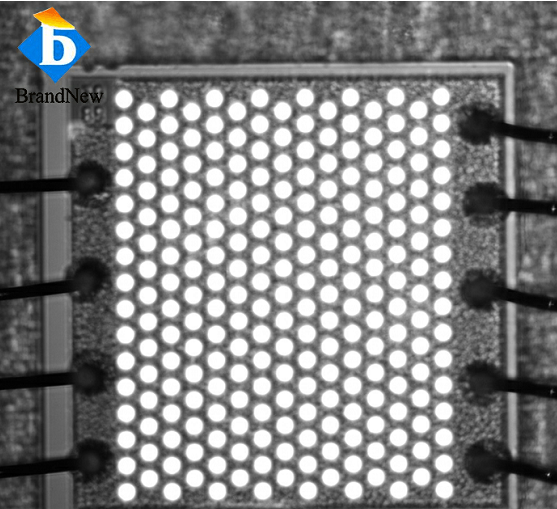
What is VCSEL Application Areas

Optical Communication:
Resonators have short round trip times and VCSELs can modulate frequencies in the gigahertz range very well. This allows them to be used as transmitters for fiber optic communications and free-space optical communications. For short distance communications, VCSELs are used in combination with multimode fibers. Data rates of, for example, 10 Gbit/s can be achieved over distances of several hundred meters.
Gas Sensing:
Gas sensing using wavelength tunable infrared VCSELs. Such devices are built, for example, as MEMS VCSELs with separate output coupling mirrors whose position can be adjusted by thermal expansion, electrostatic forces or piezoelectric elements.
Optical oxygen sensors are particularly important because the 760 nm absorption line is in the range of GaAs-based VCSELs, while long-wavelength VCSELs that can be used to detect water vapor, methane, or carbon dioxide need to be further developed before they can be widely used.
Optical Clocks:
VCSELs can also be used in miniature optical clocks where a laser beam detects atomic transitions in cesium vapor. Such clocks can be part of compact GPS devices.
Laser pumping:
Due to their high output power, VCSEL arrays can often compete with diode strips (and in some cases even with diode stacks), e.g. for pumping solid-state lasers.
Computer mouse:
The computer mouse is an application area that was developed later but has already gained significant market volume. Laser mice using VCSELs as light source can have high tracking accuracy and low power consumption, which is important for battery-powered devices.
Optical Communication
VCSEL laser diodes are used in optical communication technology. Their circular beam shape, wide free spectral range, and large continuous tuning range make them ideal for optical communications. Vertical cavity surface emitting laser diodes can transmit data at rates of 100 GB per second.
3D Sensing
High-power VCSEL laser diode has emerged as a key technology for DMS (Driver Monitoring Systems) and OMS (Occupant Monitoring Systems). In addition, the technology is used for facial recognition, LiDAR, and gesture control, among other things.
Computer Mice
An application area which was developed later, but has acquired a large market volume, is that of computer mice. A laser mouse with a VCSEL laser diode as light source can have a high tracking precision combined with a low electricity consumption, as is important for battery-powered devices.
Biomedical Applications
VCSEL laser diodes are used in medical applications, including biomedical imaging and diagnostics. Their compact size and low power consumption make them suitable for applications like optical coherence tomography (OCT) and medical spectroscopy.
What is principles of VCSEL?
In a VCSEL, the active layer is sandwiched between two highly reflective mirrors (called distributed Bragg reflectors, or DBRs) that consist of alternating semiconductor layers of high and low refractive indices a few quarter-wavelengths thick. The reflectivity of these mirrors is typically between 99.5% and 99.9%. A typical VCSEL consists of two oppositely doped Distributed Bragg Reflectors (DBRs) with a cavity layer between them. At the center of the cavity layer is an active region consisting of multiple quantum wells. Currents are injected into the active region through the oxide aperture or the current-guided structure provided by the plasmonic injection environment. The VCSEL cavity is very short, 100-1000 times shorter than the cavity of a typical edge-emitting laser. There is typically only one Fabry-Perot (FP) wavelength within the gain spectrum; therefore, the FP wavelength (not the gain peak) determines the laser wavelength. Variations in the optical thickness of the layers in a VCSEL change the laser wavelength.

What is the difference between a laser diode and a VCSEL?

Laser diodes and VCELS are semiconductor lasers, the simplest form of solid-state lasers. Laser diodes are often called edge-emitting laser diodes because the laser light is emitted from the edge of the substrate. The light-emitting area of a laser diode is often called an emitter. The size and number of emitters determine the output power and beam quality of the laser diode. The main difference between laser diodes and light-emitting diodes is that the light generated by the pn junction is not emitted over the entire surface of the chip, as in light-emitting diodes, but only in a very small window at the edge of the chip. This makes the laser diode an edge emitter and, due to the very small exit window, a coherent light source.
This coherence is an important property in addition to the high energy density of the light. The small exit window enables the light to be strongly focused into an almost completely parallel beam. Compared to conventional laser diodes, the emission surface of VCSELs (Vertical Cavity Surface Emitting Lasers) is larger and located on the top surface of the semiconductor chip. This makes the geometric design of VCSELs simpler than for laser diodes, where the chips usually have to be arranged vertically. Both components are suitable as light sources for optical measurement tasks, especially over long distances.
What is the difference between VCSEL and EEL?

When comparing EEL lasers to VCSELs, there are some clear differences that make VCSELs a superior technology in many ways.
Structure and Functionality:
One of the most notable differences is in their structure. EEL lasers are thin, long, and emit light from the edge, which limits their scalability and performance consistency. VCSELs, on the other hand, are compact and emit light from the surface, making them easier to mass-produce while maintaining performance consistency. It's like comparing a narrow straw to a wide-open funnel, and the difference in design can have a drastic impact on functionality.
Power Efficiency:
When it comes to power consumption, VCSEL lasers are far ahead. They consume much less power than EEL lasers, making them ideal for applications that require efficient performance. This is especially important in data centers and consumer electronics, where energy efficiency is a growing concern. Why waste energy when you can get the same or even better results with less energy?
Optical Communications Performance:
VCSEL technology is also making a splash in the field of optical communications. Capable of transmitting data faster and more efficiently than EEL lasers, VCSELs are becoming the solution of choice for high-speed data transmission. This is significant in a world that increasingly relies on fast and reliable data exchange.
What are the advantages of VCSEL?

Vertical Cavity Surface Emitting Lasers (VCSELs) offer various advantages over other types of lasers. These advantages include: Surface emission, providing design flexibility for addressable arrays; Low temperature dependence of the laser wavelength; Excellent reliability; Wafer-level manufacturing process. These features make VCSELs more suitable for a wide range of applications than traditional edge-emitting diode lasers and LEDs. BrandNewTech VCSEL technology includes epitaxial structure and chip design, epitaxial growth, front-end and back-end processing, packaging, and advanced testing and simulation. The VCSEL is, today, an established light source for data transmission in short-distance links, interconnects, and local networks (LANs, SANS, etc.). In these applications, the VCSEL is on-off modulated for the transmission of digital signals. Recent work on analog modulation of VCSELs indicates that VCSELs are suitable light sources also for the transmission of RF and microwave signals in, e.g., radio-over-fiber (RoF) networks used in antenna remoting in cellular systems for mobile communication. There are many more advantages: High Efficiency: VCSELs are highly efficient and can produce a lot of light output with relatively low input power. This makes them suitable for a variety of applications where energy efficiency is important. Low Cost: VCSELs are relatively simple to manufacture, so they are less expensive to produce than other types of lasers. Low Heat Generation: VCSELs generate very little heat, making them suitable for use in compact devices where heat dissipation is a concern. High Reliability: VCSELs have high reliability and long service life, making them suitable for mission-critical applications where downtime is not an option. Versatility: VCSELs can be designed to operate at a variety of wavelengths and can be modulated at high speeds, making them suitable for a wide range of applications.
What is VCSEL based sensors for distance and velocity?
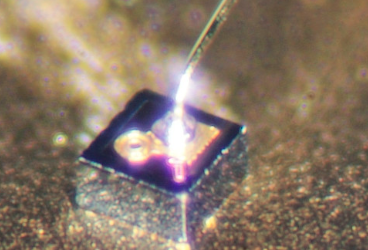
VCSEL-based sensors can measure distance and speed in three dimensions and are already produced in large quantities for professional and consumer applications. It uses several physical principles: VCSELs are used as infrared illumination for surveillance cameras. High-power arrays combined with imaging optics provide uniform illumination of scenes over a range of hundreds of meters. The time-of-flight method uses pulsed VCSELs as light sources, either as intense single pulses with a low duty cycle or as pulse trains. Due to sensitivity to background light and the strong attenuation of the signal with distance, laser powers of several watts are required at distances of up to 100 meters. VCSEL arrays enable power scalability and can deliver very short pulses at higher power densities. Applications range from extended functionality in smartphones to industrial sensors to automotive LiDAR for driver assistance and autonomous driving. Self-mixing interferometry works with coherent laser photons that are scattered back into the cavity. It is therefore insensitive to ambient light. The method is used to measure target speed and distance with very high accuracy over distances of up to one meter. Single-mode VCSELs with integrated photodiodes and grating-stabilized polarization enable very compact and cost-effective products. In addition to the well-known applications of computer input devices, new applications with even higher precision are also being investigated, such as for automotive ground speed measurement up to 250 km/h. All measurement methods exploit known VCSEL properties such as robustness, temperature stability and the potential for integrated optics and electronics packaging. This makes VCSEL sensors ideally suited for new large-scale applications in the consumer and automotive markets.
What is Future Growth for VCSELs?

Currently, VCSELs are used primarily in data communications. The VCSEL market is expected to grow significantly as demand for smartphones, LiDAR, 5G, and IoT devices and technologies shift and grow. Since it is very easy to make multiple lasers on a single array, VCSELs will have great potential for use in these types of emerging technologies over the next few decades as long as power continues to climb into watts and kilowatts. Next-generation products in industrial and 3D sensing, in particular, will require large deployments of VCSELs to meet design and performance needs. When two or three VCSELs are combined on a single chip, they can be used for high-precision speed measurement in sensing applications. For example, the iPhone X released in 2017 used three VCSELs to enable facial recognition. Breakthrough products occur when VCSELs are combined into thousands or even millions at a time on a single chip. Ten thousand VCSELs combined together would enable widespread consumer adoption of LiDAR technology, such as for self-driving cars.
What is the role of VCSELs in 3D sensing and lidar?
Vertical Cavity Surface Emitting Lasers (VCSELs) play an important role in the consumer electronics 3D sensing industry. Companies adopting short-wave infrared (SWIR) VCSELs, a technology that reduces interference from sunlight and ambient light and mitigates white spot phenomena, will help drive VCSEL prices higher, leading to a market rebound. Consumer mobile will continue to drive VCSEL deployments in the 3D Sensing market for the next few years. ‘Face ID’ has been the enabling application that drives high volume. 3D cameras for AR/VR in consumer mobile, and in-cabin monitoring in automotive appears to be the next attractive application for VCSELs. VCSEL LIDAR may also be interesting in the longer term, . In particular, LiDAR applications using time-of-flight (ToF) mapping methods require high-power VCSELs with high throughput and fast rise times to achieve high spatial resolution and longer detection distances. However, as the available optical gain of multi-junction VCSELs increases, their cavity structures become more complex, including multiple active regions, tunnel junctions, and optical confinement layers. These factors interact to affect the optical, spectral, and electrical characteristics of these devices.

The Feature of Vertical Stacked Laser Diode
High Coupling Efficiency
The larger output aperture of VCSEL laser diode, compared to most edge-emitting lasers, produces a lower divergence angle of the output beam, and makes possible high coupling efficiency with optical fibers.
01
Low power consumption
The small active region, reduces the threshold current of VCSEL laser diode, resulting in low power consumption. The low threshold current also permits high intrinsic modulation bandwidths in VCSEL laser diode.
02
Small Footprint
VCSEL laser diodes are space-efficient laser sources. A single-emitter of a VCSEL laser diode can be as small as a few micrometers (microns) wide and tens of microns tall, leading to practical die sizes (with pads, keep out areas etc) less than 100 micrometers in all dimensions. Adding emitters to a die for more output power is as simple as laying them out side-by-side at a certain spacing or pitch.
03
Optimized beam profile
The round beam, which can even be Gaussian in shape, the low beam divergence and the different light modes (multimode and single-mode) make VCSEL laser diode perfect for a variety of applications.
04
Precautions For The Use Of Laser Diodes
The laser light emitted from this Device is invisible and will harmful to the human eye. Avoid looking directly into the fiber output or into the collimated beam along its optical axis when the device is in operation. Proper laser safety eyewear must be worn during operation.
Absolute Maximum Ratings may be applied to the Device for short period of time only. Exposure to maximum ratings for extended period of time or exposure above one or more max ratings may cause damage or affect the reliability of the Device.
Operating the product outside of its maximum ratings may cause device failure or a safety hazard. Power supplies used with the device must be employed such that the maximum peak optical power cannot be exceeded. A proper heat sink for the Device on thermal radiator is required, sufficient heat dissipation and thermal conductance to the heat sink must be ensured.
The Device is an Open-Heat sink Diode Laser; it may be operated in clean room atmosphere or dust-protected housing only. Operating temperature and relative humidity must be controlled to avoid water condensation on the laser facets. Any contamination or contact of the laser facet must be avoided.
ESD PROTECTION – Electrostatic discharge is the primary cause of unexpected product failure. Take extreme precaution to prevent ESD. Use wrist straps, grounded work surfaces and rigorous antistatic techniques when handling the product.
Order process

Our Certificate

Our Clean Room


Hangzhou Brandnew Technology Co., Ltd. is one of the leading vcsel laser diode manufacturers and suppliers in China, has a professional factory which manufacturers high quality vcsel laser diode and sells at competitive price. Welcome to wholesale our products made in China.