




Special fiber technology
All-fiber lasers need to use a variety of special fibers such as double-clad active fibers, double-clad photosensitive fibers, energy transmission fibers, etc. With the continuous increase of output power, the technical requirements for special fibers are getting higher and higher. Therefore, special The development of optical fiber will play an important role in the development of fiber lasers. A new generation of special fibers represented by photonic crystal fibers will gradually be applied in the development of fiber lasers. The development of special optical fibers will make active optical fibers have higher gains, withstand greater power density, and absorb pump light more effectively; it will make the production of gratings easier, and the stability of the gratings will be better. The use of lasers is more extensive; it will enable energy transmission fibers to transmit higher power, high-power lasers can be transmitted longer distances, and the wavelength range that can be transmitted continues to expand; it will make pump coupling easier to achieve and bearable The pump power is higher, the loss is smaller and so on.
Cladding pump coupling technology
The cladding pump coupling technology of all-fiber lasers has an inestimable effect on determining the performance and level of fiber lasers. The fiber pump coupling devices and fiber power combining devices used for high-power all-fiber lasers are used under very high power conditions. The coupling efficiency must be very high, the loss must be small, and the power must be large, and, The number of input light paths needs to be as many as possible. Under so many extreme conditions, it is very difficult to make high-quality pump coupling devices and power combining devices. However, the implementation methods and methods also occupy a variety of ways, which is a challenging technology. From the perspective of the development trend of high-power all-fiber lasers, it is also required that the pump coupling device couples the pump light to the inner cladding while not affecting and damaging the core of the double-clad fiber as much as possible, because only in this way can it not affect the core of the double-clad fiber. In the case of signal laser generation and transmission, cascade pumping is realized to achieve ultra-high power output.
Fiber Bragg Grating Technology
In all-fiber lasers, the current role of fiber gratings is to reflect the signal laser in the core to form a resonant cavity. However, with the further development of fiber laser technology, fiber gratings will have new uses in fiber lasers. The production technology of the company presents new challenges, and one of the directions worthy of attention is the production of high-quality fiber gratings on large-diameter multimode fibers.
Diode Pump Laser Technology
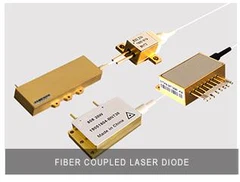
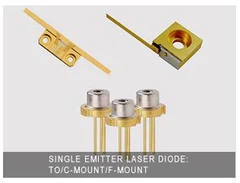
Diode pump lasers are the key components of fiber lasers, which are of vital importance to the reliability, life and production cost of the fiber. The development of a single wide light-emitting region and long life semiconductor pump laser has become a type of semiconductor pump laser for fiber lasers. The trend is to continuously improve the output power of a single laser, continuously reduce the cost and further improve the reliability. Among them, improving and innovating the packaging structure should be the core work, because the current packaging cost is still very high.
Fiber laser machine technology
The whole machine design and production of all-fiber lasers involve a lot of knowledge, content, technology, craftsmanship, and experience. It is the core and most critical technology in the design and production of all-fiber lasers, especially in the development history of new high-power all-fiber lasers Today, which is still quite short, there is still a lot of groundbreaking work to be done. The design and production of the entire fiber laser machine requires not only a reasonable design for the application, but also the responsibility of improving and innovating the structure and scheme of the whole machine, as well as the improvement and innovation of important components and key technologies.