




Varicose veins are swollen, bulging veins that often occur on the thighs or calves. They can cause pain, inflammation, skin irritation, and cosmetic problems. One of the treatments for varicose veins is endovenous laser ablation (EVLA), which uses heat from a laser to close and shrink the vein. The laser is inserted into the vein through a small incision and emits a beam of light that heats up the blood and causes it to clot. This blocks the blood flow in the vein and redirects it to other nearby veins.
Different laser wavelengths have different effects on the vein and the surrounding tissue. The wavelength determines how much energy is absorbed by the blood and how much is transmitted to the tissue. The optimal wavelength for EVLA should have high absorption by blood and low absorption by tissue, to minimize damage to the surrounding skin, nerves, and muscles.
According to some studies, the most commonly used laser wavelengths for EVLA are 810 nm, 940 nm, 980 nm, 1064 nm, 1320 nm, and 1470 nm. Each wavelength has its advantages and disadvantages. For example:
810 nm has high absorption by blood and low absorption by tissue, but it also has high scattering by blood, which reduces its effectiveness and increases the risk of perforation.
940 nm has lower scattering by blood than 810 nm, but it also has lower absorption by blood and higher absorption by tissue, which increases the risk of thermal injury.
980 nm has similar properties to 940 nm, but it has higher absorption by porphyrin vascular cells, which are responsible for forming varicose veins. This makes it more effective for small, superficial red or blue veins (<0.5 mm) and telangiectatic mats1.
1064 nm has low absorption by blood and tissue, but it also has low scattering by blood, which makes it penetrate deeper into the vein. This makes it more effective for larger veins (>1 mm) and deeper veins (>5 mm).
1320 nm has very low absorption by blood and tissue, but it also has very low scattering by blood, which makes it penetrate even deeper into the vein. This makes it more effective for very large veins (>2 mm) and very deep veins (>10 mm).
1470 nm has high absorption by water, which is abundant in both blood and tissue. This makes it heat up both the vein and the surrounding tissue evenly. This reduces the risk of perforation and thermal injury, but it also reduces the effectiveness of clotting.
There is no definitive answer to which laser wavelength is best for treating varicose veins. The choice depends on several factors, such as the size, depth, location, and type of vein; the patient’s skin type and sensitivity; the operator’s experience and preference; and the availability and cost of equipment. A comprehensive assessment of each case is necessary to determine the most suitable wavelength for EVLA.
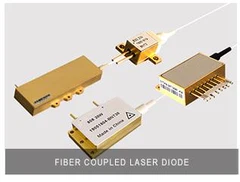
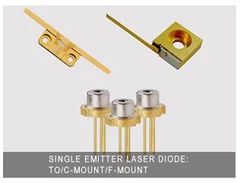
Brandnew can provide the fiber coupled laser diode with multi wavelengths as below photo.
Welcome contact us for more details:
Whatsapp/Skype/Wechat: 0086 181 5840 0345
Email: info@brandnew-china.com
