




The Principle of Laser Distance Sensor

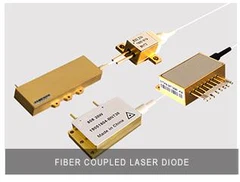
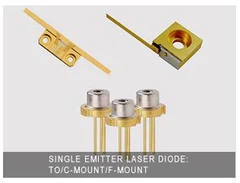
The laser distance measuring sensor is firstly directed by the laser diode to the target emitting laser pulse, and the laser beam is scattered in various directions after being reflected by the target. Part of the scattered light is returned to the sensor receiver, which is received by the optical system and imaged onto an avalanche photodiode. An avalanche photodiode is an optical sensor with an internal amplification function, so it can detect extremely weak light signals. The target distance can be determined by recording and processing the time elapsed from the light pulse emission to the time when the return was received.
The laser sensor must measure the transmission time extremely accurately because the speed of light is too fast. To distinguish the 3ps time, this is an overly demanding electronic technology, which is too expensive to implement. But today's laser sensors cleverly avoid this hurdle, using a simple statistical principle that the average law achieves a resolution of 1mm and guarantees responsiveness.
The long-distance laser range finder emits a very fine laser beam to the target during operation. The photoelectric element receives the laser beam reflected from the target. The timer measures the time from laser beam emission to reception and calculates the distance from the observer to the target. LED white light gun imaging in the instrument internal integrated circuit chip CCD, CCD chip performance is stable, long working life, and is basically not affected by the working environment and temperature. Therefore, the LED white light speed meter accuracy is guaranteed, the performance is stable and reliable.