




Laser welding is a process that uses the radiant energy of a laser to achieve effective welding. The working principle is to excite a laser active medium (such as a mixed gas of CO2 and other gases, YAG yttrium aluminum garnet crystal, etc.) in a specific manner. The reciprocating oscillation in the cavity forms a stimulated radiation beam. When the beam is in contact with the workpiece, its energy is absorbed by the workpiece, and welding can be performed when the temperature reaches the melting point of the material.
Laser welding can be divided into heat conduction welding and deep fusion welding. The heat of the former is diffused to the inside of the workpiece through heat transfer, and only the surface of the weld is melted. The inside of the workpiece is not completely penetrated, and basically no vaporization occurs, and it is mostly used for low-speed thin wall. The welding of the material; the latter not only completely penetrates the material, but also vaporizes the material to form a large amount of plasma. Due to the large heat, a keyhole phenomenon occurs at the front end of the molten pool. Deep fusion welding can thoroughly penetrate the workpiece, and has high input energy and fast welding speed. It is the most widely used laser welding mode.
Advantages of laser welding
1 Laser welding can achieve high quality joint strength and large aspect ratio, and the welding speed is faster.
2 Because laser welding does not require a vacuum environment, remote control and automated production can be achieved through lenses and optical fibers.
3 Laser has a large power density, good welding effect on difficult-to-weld materials such as titanium and quartz, and can weld different performance materials.
4 Micro soldering is possible. The laser beam is focused to obtain a small spot, and can be accurately positioned, and can be applied to the mass welding of small and small workpieces that are automatically produced in large quantities.
Disadvantages of laser welding
1 Laser and welding system parts are more expensive, so the initial investment and maintenance costs are higher than traditional welding processes, and the economic benefits are poor.
2 The conversion efficiency of laser welding is generally low (usually 5% to 30%) due to the low absorption rate of the laser by solid materials, especially after the plasma is present (the plasma has an absorption effect on the laser).
3 Due to the small spot size of the laser welding, the precision of the equipment for the workpiece joint is high, and the small equipment deviation will cause a large processing error.
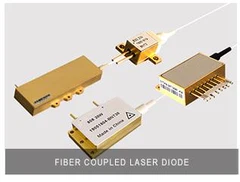
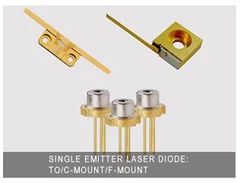
BrandNew can provide high power fiber coupled laser diode for laser welding.
Power: KW level; wavelength: 915nm or 976nm optional
Robust design for operation in harsh environments
Parallel sealing process, anti condensation design
High brightness, high reliability and stability
More details, pls kindly visit below link:

Also welcome to contact me directly for more info.
Whatsapp/Skype/Wechat: 0086 181 5840 0345
Email: info@brandnew-china.com