



Can Laser Diodes Be Customized From Specification to Mass Production?
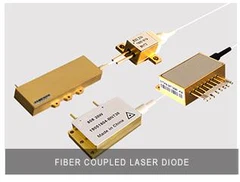
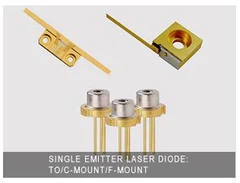
Yes. Laser diode customization spans wavelength, output power, packaging format, fiber core diameter, numerical aperture, operating mode, aiming beam integration, and thermoelectric cooler integration.
Moving from an initial concept to full-scale volume production typically follows six structured stages: requirement and specification freeze, feasibility and cost review, engineering sampling, performance and reliability validation, pilot production, and volume ramp.
The primary engineering risk occurs between engineering sampling and reliability validation, because achieving specification compliance on initial samples does not automatically prove a stable manufacturing process window or repeatable production yield.
A custom laser diode program begins by locking down technical requirements so downstream engineering and procurement teams work from an unambiguous baseline.
Eight core parameters to define:
center wavelength, optical output power, package type, fiber core size, numerical aperture, operating mode, thermal control architecture, and required safety or regulatory certifications.
Peak versus continuous power clarity:
pulsed and quasi-continuous-wave specifications must explicitly separate peak power, average power, pulse width, repetition rate, and duty cycle.
Center wavelength versus operating tolerance:
buyers should specify both the nominal center wavelength and acceptable wavelength shift across operating current and temperature ranges.
Once specifications are frozen, engineering and commercial teams evaluate whether the design can be built reliably and economically at the target volume.
Epitaxial structure availability:
engineering verifies whether an existing epitaxial wafer structure covers the requested wavelength or whether new epitaxial growth and chip design are required.
Package and optical tooling assessment:
teams determine whether standard housings, submounts, or fiber coupling fixtures apply, or whether custom mechanical tooling and optical jigs are needed.
Preliminary cost and lead-time alignment:
non-recurring engineering charges, unit pricing tiers, sample turnaround, and production lead times are established before committing to builds.
Engineering samples validate optical, electrical, and mechanical integration on the customer bench or prototype system.
Sample quantity and representativeness:
initial sample lots are typically small and built to prove core functionality, while later evaluation lots should reflect representative process conditions.
Mandatory test documentation:
every sample shipment should include clear measurement data covering optical power versus current, wavelength and spectral width, threshold and operating voltage, beam or fiber output characteristics, and thermal behavior under defined test conditions.
Transitioning from prototype samples to commercial hardware requires proving durability and manufacturing repeatability.
Reliability qualification testing:
modules undergo stress evaluations such as temperature cycling, high-temperature or accelerated aging, and mechanical or environmental testing aligned with application requirements.
Process window and yield evaluation:
pilot runs test assembly tolerances, alignment stability, and first-pass yield across multiple units to confirm that specifications hold without excessive rework.
Change control agreements:
formal engineering change notification terms establish when suppliers must inform customers of material, process, or component changes.
After pilot validation passes, production scales toward steady-state volume manufacturing with ongoing supply protection.
Capacity reservation and buffer planning:
volume programs benefit from forecast alignment, dedicated production capacity, and agreed safety stock or lead-time commitments.
Statistical process control:
ongoing monitoring of key optical and electrical metrics keeps batch-to-batch performance consistent across production lots.
FAQ

01.What is the minimum order quantity for custom laser diodes?
02.Where do custom laser diode schedules most commonly slip?
Our address
RM1705, Building 2, Aoqiang Mansion, No. 6 Xiyuan 5th Rd
Phone Number
+ 86 181 5840 0345
wp@brandnew-china.com