




Laser types and uses
The purity of the light emitted by the laser and the stability of the spectrum can be applied in many ways.
Ruby Laser:
The original laser was ruby being excited by a bright flash light bulb. The laser produced was a "pulsed laser" rather than a continuously stable beam. The quality of the laser's speed of light is essentially different from that of the laser diodes we use today. This strong light emission, which lasts only a few nanoseconds, is ideal for capturing easily moving objects such as holographic portraitures. The first laser portrait was born in 1967. Ruby lasers require expensive ruby and can only produce pulsed light for watching.
Helium laser:
1960 scientists Ali Javan, William R. Brennet Jr. and Donald Herriot designed a helium-neon laser. This is the first gas laser that is commonly used by holographic photographers. Two advantages: 1. Generate a continuous laser output; 2. No flash bulb is required for light excitation, and electricity is used to stimulate the gas.
Laser diode:
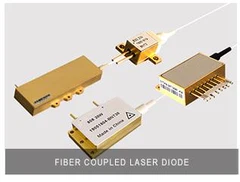
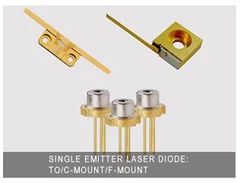
Laser diode is one of the most commonly used lasers at present. The phenomenon of spontaneous recombination of electrons and holes on the sides of a PN junction of a diode and light emission is called spontaneous radiation. When the photons generated by spontaneous emission pass through the semiconductor, once they pass near the emitted electron-hole pairs, they can stimulate the two to recombine to generate new photons, which induce the recombination of the excited carriers and emit new photons. The phenomenon is called stimulated radiation. If the injection current is sufficiently large, a carrier distribution opposite to the thermal equilibrium state is formed, ie, the number of particles is reversed. When the carrier in the active layer is reversed in a large number, photons generated by a small amount of spontaneous radiation generate inductive radiation due to the reciprocal reflection of both ends of the resonant cavity, resulting in selective frequency resonant feedback, or gain for a certain frequency. When the gain is greater than the absorption loss, a coherent light with a good spectral line-laser can be emitted from the PN junction. The invention of laser diodes allows rapid popularization of laser applications. Various types of applications, such as information scanning, optical fiber communications, laser ranging, laser radar, laser discs, laser pointers, supermarket receipts, etc., are constantly being developed and popularized.