


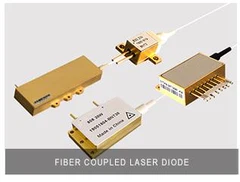
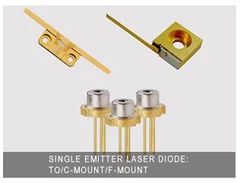


Structured light lasers are generally dominated by single-line, multi-line, cross and other patterns. The most common is the single-line laser. When many friends choose a single-line laser, they often struggle with how much power they should choose to meet the actual application scenario. This chapter describes it from three aspects: the definition of power, the factors affecting power, and the method of selecting power.
1. Definition of power
Laser power is generally divided into nominal power and light output power. If it is a point laser, the nominal power is basically the same as the output power. If it is a line laser, the output power is about 60% -70% of the nominal power, and some of it is converted into heat energy. Therefore, heat dissipation is a key indicator that affects the performance of the laser, which we will talk about later.
At present, the optical power in most domestic and foreign supplier manuals is actually the nominal power. This must be clear. Basically, if the output power is 100mW, it can only indicate that the output power of the laser diode used is 100mW. The actual output power of a specific laser depends on the technical level of different manufacturers. Better manufacturers can control the dissipation to about 25% -30%.
2. Factors affecting power
The main factors affecting power are: laser diodes, heat dissipation problems, and absorbers and scattering of optical components.
The power of laser diodes of different wavelengths is obviously different.
If a small-sized laser is used at a relatively high temperature, it is generally necessary to increase the temperature of the TEC chip to cool down, and at the same time, the power must not be too large, and the external structure must have a good thermal environment.
When laser diode is stimulated to emit light, it needs to pass through a variety of optical components. The difference in optical components and the difference in structural design and installation matching directly lead to different power consumption of the laser.
3. Choose the power method.
If there is a requirement for laser eye safety, it is recommended to choose a laser with a Powell prism. As shown below. The upper part of the picture shows a laser without Powell prism. The output light energy is Gaussian distributed, which is easy to form an energy gathering point and is not safe for human eyes. The line lasers using Powell prisms have good uniformity of energy distribution, and it is not easy to form energy gathering points.