




What is special about 2μm lasers?
In principle, the 2μm band is in the safe band for human eyes, and has good absorption spectra for NO, H2O, CO2, etc. It can be applied to multiple directions such as laser radar, space communication, biomedicine, and material processing.
In the field of material processing, metal processing is estimated to account for more than 85% of the industrial laser market, while non-metal processing currently accounts for less than 15%. At present, Europe, the United States and Japan are in a leading position in the development and exploration of non-metal processing technology. Due to the immaturity of the process and the need to apply lasers of different powers and wavelengths according to different materials, there is not much attention in the field of non-metal processing in China. In recent years, under the background of energy conservation and emission reduction, the application of non-metallic materials has become more and more popular.
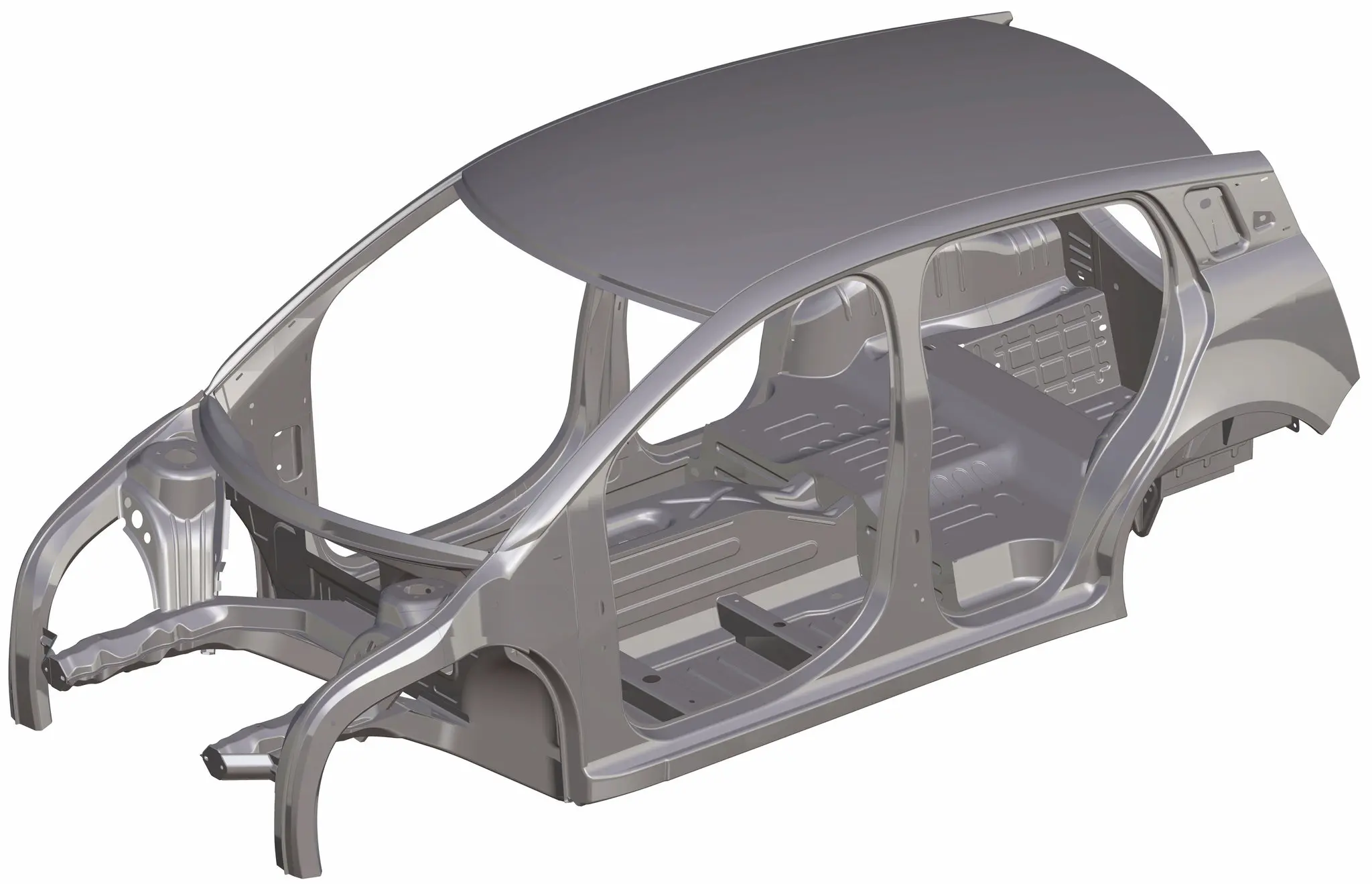
Taking the automotive industry as an example, "replacing steel with plastic" is becoming an important measure for lightweighting. Whether it is exterior trim or interior trim, the amount of plastic used is increasing. With the continuous improvement of the hardness, strength, and tensile properties of engineering plastics, plastic windows, doors, frames, and even more key automotive parts are using plastics to replace steel materials. This will further promote the popularization of laser processing applications for non-metallic materials.
From the perspective of the wavelength, 2μm lasers are very attractive in material processing, especially plastic processing. Most similar plastic materials have strong enough absorption near 2μm, so they can be directly processed, and the absorbed energy can be used for cutting, welding, and marking. Based on the development of non-metallic material processing needs, 2μm lasers have become a research hotspot in the field of fiber lasers in the past decade.

In order to further meet application needs, Brandnew has specially launched a new generation of 2μm CW thulium-doped fiber lasers with an average output power of 10W and a central wavelength of 1940nm. It has many advantages, such as high electro-optical conversion efficiency, low energy consumption, no adjustment and maintenance, flexible optical fiber conduction output, compact structure, small size, light weight, easy handling and transportation, etc. It provides an ideal light source for applications such as biomedicine, plastic cutting and welding, and environmental monitoring.
Plastic laser welding opens up new application markets
Laser welding of plastics is also called laser transmission welding. The beam generated by the laser is focused on the area to be welded, that is, the laser beam passes through the upper part and is absorbed by the other part at the contact surface of the two parts, forming a heat action zone (weld). The plastic in the heat action zone is melted, and the plastic macromolecules in the hot melt state diffuse with each other under the action of welding pressure, generating van der Waals forces, and then tightly connecting the two parts together.
Compared with traditional welding processes such as gluing, hot melt welding, ultrasonic welding, and vibration welding, laser plastic welding has the advantages of no physical contact, good smooth welding effect, and high degree of automation. Since the absorption rate of thermoplastics such as PP, PC, and PMMA for 2μm band light is significantly higher than that of visible light and near-infrared bands, welding with 2μm thulium-doped fiber lasers is more competitive.
In automotive applications, PC materials account for about 50% of the plastic materials in headlights, and are generally used for automobile taillight housings and trims. PP materials account for about 30% of the plastic materials in headlights, and are usually used for the rear cover, trim and wire harness guide of taillights, and the housing and rear cover of headlights. PMMA has excellent optical properties, with a transmittance of 90%-92%, a refractive index of 1.49, high surface hardness and excellent comprehensive performance. It is mainly used as a light guide material for optically transparent products, taillight exterior mirrors and interior atmosphere lights.
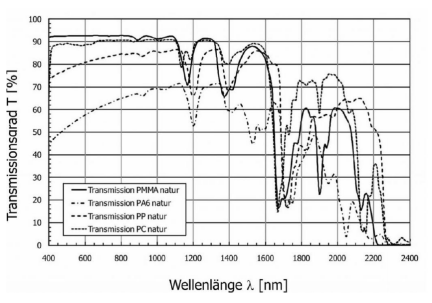
By using Brandnew 2μm CW thulium-doped fiber laser to test the welding of PP, PC, and PMMA materials, uniform and consistent welds can be achieved, and the welds are flat and smooth, without pores and overburning. Among them, in the welding of PC materials, the shear force exceeds 1300N under the 1.5mm weld width, and the test parent material breaks. In the welding of PP materials, the shear force exceeds 1000N under the 2mm weld width, and the test parent material breaks. In the welding of PMMA materials, the shear force exceeds 800N under the 1.3mm weld width, and the test parent material breaks.
In the welding of dissimilar materials, Brandnew 2μm CW thulium-doped fiber laser still performs very well. After testing, the PC transparent + PMMA black sample test weld is stable and consistent, and an effective welding effect can be obtained; the PMMA transparent + PC black sample test weld has slight fluctuations, and the tensile test parent material breaks, and an effective welding effect can be obtained.
Laser plastic welding is now mainly used in plastic parts such as car lights, car dashboards, and auto parts. According to the data from the China Association of Automobile Manufacturers, from January to September, China's automobile production and sales totaled 21.075 million and 21.069 million, up 7.3% and 8.2% year-on-year respectively, maintaining a stable growth trend. With the rapid rise of new energy vehicles in China, the demand for plastic processing is becoming more and more vigorous. As a new welding process, 2μm fiber lasers will be further applied and popularized.
In addition to plastic welding, 2μm lasers have great uses
Biomedical analysis instruments usually require sterility and cannot be mixed with any chemical substances, etc. Laser welding, as a non-contact welding method, is particularly suitable for the production of such products. In the field of medical devices, plastic laser welding is mainly used in injection systems, medical electronic equipment, various artificial transplants and stoma products, etc.
In addition to plastic welding, 2μm lasers have a suitable absorption peak in water, which is particularly suitable for medical applications, allowing the laser to penetrate the skin to a depth of no more than a few hundred μm. The main component of biological tissue is water. The high absorption of 2μm lasers can achieve extremely small-scale heating, thereby achieving precise cutting and rapid hemostasis, which is the best choice for many surgical operations.
The micro-action area of only 50μm in size can keep the stratum corneum scaffold unchanged, achieve epidermal regeneration and reconstruction, and can be repaired in a short period of time; the laser accurately acts on the dermis, which can stimulate the skin's minimally invasive mechanism and complete collagen regeneration and remodeling; at the same time, it requires microsecond dynamic pulse time and kilohertz high-speed step response, and experience fast and comfortable. These are the advantages of 2μm lasers!
Our address
B-1508 Ruiding Mansion,No.200 Zhenhua Rd,Xihu District
Phone Number
0086 181 5840 0345
info@brandnew-china.com
