



Dust detection technology was first developed in the 1950s. Developed countries represented by Britain, the United States, Japan, and Germany took the lead in conducting relevant research and applied it to industrial and mining dust monitoring and other scenarios to control and prevent various occupational diseases caused by inhalable dust. After decades of development, dust detection technology based on the principle of light scattering has gradually entered civilian fields such as air purifiers. Since the 21st century, with the acceleration of China's industrialization process, environmental pollution as a byproduct has become increasingly prominent, and the respiratory health of urban residents has been affected by the haze problem. Therefore, particulate pollution detection technology represented by "PM2.5" has also entered the public eye for the first time and has become a key topic of widespread social concern. PM2.5 sensors have gradually become an important tool for air quality detection indoors, in cars, and in public places.

Early dust sensors mainly used infrared LEDs as light sources, which generated heat through resistors to obtain hot air flow. When particles in the air pass through, they are scattered after contacting the LED light source, and are received by the photosensitive detector to generate electrical signals of different sizes. After amplification and calculation, the detection results are obtained. In this technology, due to the low intensity of LED scattered light and the weak airflow generated by the heating resistor, it is usually only effective for larger particles with a diameter greater than 1μm, and can only characterize the changes in particles in the air through the duty cycle of the electrical signal. The measurement value error is maximized, and it cannot adapt to the changing environment of the dust source, making it difficult to achieve real-time monitoring of particles such as PM2.5.

In pursuit of higher performance, PM2.5 sensors have begun to introduce laser technology, using low-power semiconductor lasers as light sources to replace the original infrared LEDs. Through a fan or blower, the sampled air is pushed into the area where the laser beam is located. The particles in the air scatter the laser, and the scattering angle and light intensity distribution of particles of different particle sizes are different; by installing photosensitive detectors at different locations, the scattered light is collected and converted into electrical signals. After analysis, the concentration of particles of different sizes can be quickly obtained, thereby achieving high-precision measurement.
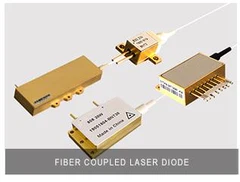
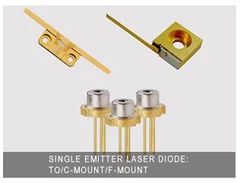
In addition to indoor appliances, the demand for PM2.5 detection in cars and outdoor environments is also growing. Faced with a more complex use environment, the low-power semiconductor laser used in the sensor is not only required to have a stable light output power, but also to work for a long time in a wide range of ambient temperature changes, so higher requirements are placed on the overall reliability of the laser. In the early days, PM2.5 sensors mostly used imported brands, but in recent years, Brandnew has made key technological breakthroughs in the research and development of semiconductor lasers, introducing advanced technologies such as high-reliability epitaxial structure design and growth, high-quality cavity surface coating process, fully automatic gold-tin eutectic process, fully automatic aging and test grading into the field of low-power semiconductor laser manufacturing. Low-power semiconductor laser products represented by 650nm and 790nm can work stably in harsh environments ranging from -40℃ to 85℃. They have been recognized by leading companies and many customers in the industry in the field of PM2.5 detection, and have been widely used in indoor and outdoor and vehicle-mounted PM2.5 sensors for many years.
The application of lasers in PM2.5 dust sensing technology is mainly to detect PM2.5 concentration by using the principle of laser scattering to convert the signal scattered by PM2.5 particles into photoelectric conversion. This method uses a low-power semiconductor laser as a light source to replace the original infrared LED. The sampled air is pushed into the area where the laser beam is located by a fan or blower. The particles in the air scatter the laser, and the scattering angle and light intensity distribution of particles of different particle sizes are different. By installing photosensitive detectors at different locations, the scattered light is collected and converted into electrical signals respectively. After analysis, the concentration of particles of different sizes can be quickly obtained, thereby achieving high-precision measurement.
The application of this technology not only improves the performance of PM2.5 sensors, but also makes the measurement results more accurate and reliable. The laser PM2.5 dust sensor can detect particles of 0.3μm, and can accurately measure the values of PM1.0, PM2.5, and PM10, providing higher accuracy and performance than traditional methods. In addition, laser PM2.5 dust sensors can not only be embedded in household appliances such as air purifiers, air conditioners, and fresh air systems, but are also widely used in industrial and environmental protection fields such as online dust monitoring systems and air quality microstation monitoring systems, providing an effective technical means for monitoring and controlling the concentration of particulate matter in the air.
In short, the application of laser technology has enabled PM2.5 dust sensing technology to achieve a qualitative leap, which not only improves the accuracy and efficiency of measurement, but also provides important technical support for protecting the environment and improving air quality.
Brandnew will also continue to leverage its own advantages, adhere to the path of independent innovation, vigorously promote technological innovation, strive to become a service provider of advanced optoelectronic products and leading solutions, and lead domestic semiconductor lasers to a new level.
Founded in 2011, Professional Laser diode supplier, manufactures high-power diode lasers and systems in a wide range of output powers and wavelengths.
BrandNews strengths are in talent employees, quality engineering, process control, product development and volume manufacturing. Our range of products gives this feeling to our customers who rapidly understand that our solutions help them save time in their RD photonic system and integration work.
Our address
B-1508 Ruiding Mansion,No.200 Zhenhua Rd,Xihu District 310030 Hangzhou Zhejiang China
Phone Number
0086 181 5840 0345
info@brandnew-china.com