



Have you ever watched cable TV? It can meet users' needs for multimedia services such as high-definition television, video on demand and Internet access, but do you know how the information on television is transmitted? It is done through a network of lines underground or under the sea, that is, optical fiber. Most of the information in the world today is transmitted through optical fiber. Optical fiber is also used in medical devices. Let's learn about how optical fiber works and how it has changed the world around us. Optical cables are made up of thousands of optical fibers, and each fiber is about the thickness of a human hair. Optical cables carry information in the form of light.
The speed of light propagating between different media is different. This change in speed is expressed by the refractive index. The change in the speed of light leads to an interesting phenomenon - refraction. To understand refraction, we can imagine an interesting experiment. Suppose light passes through a prism. You can see that the light bends on the surface of the prism instead of going straight. This phenomenon is called refraction. Refraction occurs when light passes through media with different refractive indices. When light passes from a high refractive index medium to a low refractive index medium, it will be bent toward the surface. Refraction will cause the pencil placed in the water cup to look bent.

Optical fiber effectively utilizes the principle of refraction. Now, let's further deduce this prism experiment. Suppose we use some additives to continuously increase the refractive index of glass. When we increase the refractive index, the light will get closer and closer to the surface of the glass. After a while, you will find that the light propagates along the surface of the glass. If we continue to increase the refractive index, the light will suddenly return to the inside of the original medium and form a pure reflection, which is called total reflection. We can achieve total reflection by changing the reflection of the incident angle without having to increase the refractive index. This specific angle is called the critical angle, and the light will return to the original medium. This total reflection phenomenon is applied to optical fiber light transmission.


Now let's get back to the original topic. How do optical fibers transmit information such as telephone calls or the Internet? Any information can be represented by a sequence of 0s and 1s. Suppose you want to send a HELLO text message from your mobile phone. First, this word will be converted into a binary sequence. After the conversion, your mobile phone will transmit this string of binary as electromagnetic waves. Let's simply assume that 1 is represented by high-frequency waves and 0 is represented by low-frequency waves. The local base station tower will receive these electromagnetic waves. In the base station tower, the high-frequency electromagnetic waves will generate a light pulse, otherwise there will be no light pulse. Now these light pulses can be easily transmitted through optical fibers. The light pulses carrying information will reach their destination through a complex optical fiber network. Therefore, many optical cables are deployed on the surface of the earth. These optical cables are located on the ground and on the seabed. These optical cables are mainly maintained by mobile operators and other organizations.
Below is a cross-sectional diagram of a submarine optical cable. You can see that only a small part is used to place the optical fiber, and the rest are used to protect and enhance the mechanical structure. So how does the amplifier get power on the seabed? Because there is a thin copper shell in the middle of the optical cable, power is supplied to the amplifier along the optical cable, that is to say, if a place does not pass through the optical cable, that place will become an island for telephone and Internet. If we compare optical fiber with traditional copper cable wires, optical fiber has advantages in all aspects. Optical fiber can provide greater bandwidth and the transmission speed is much faster than copper cable. The current in the copper cable will generate an electromagnetic field, and even cause electromagnetic interference outside the wire, while the light in the optical fiber will always be protected inside the optical fiber, so there is no interference from external signals; another feature of the optical cable is that the light entering from the side wall is unlikely to continue to propagate along the optical fiber, so the optical fiber has higher data security.

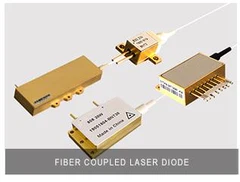
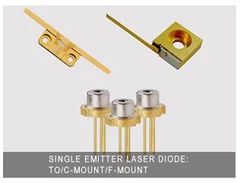
Optical fiber is widely used in the global communication network, public telecommunication networks of various countries and other fields. But what is the cornerstone that ensures the high speed and reliability of optical fiber? The answer is laser. Laser is a light source that produces a highly focused, monochromatic, coherent light beam. It can convert electrical energy into light energy and produce a light beam with a specific wavelength and direction. In optical fiber communication systems, lasers are usually used to convert information into optical signals and transmit them to the target location through optical fiber. These optical signals are modulated and encoded, transmitted to the target location through optical fiber, and then demodulated and decoded. In optical fiber communication, the most common and widely used type of laser is semiconductor laser.

Our address
B-1508 Ruiding Mansion,No.200 Zhenhua Rd,Xihu District
Phone Number
0086-571-8898-7800
info@brandnew-china.com