

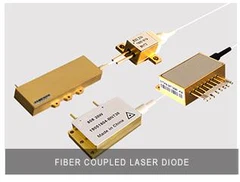
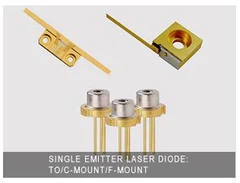


The life of a semiconductor laser is a critical parameter. In various applications, a sufficiently long working life must be ensured, especially in submarine optical cable communications and satellite communications, where the lifespan needs to reach 20-30 years. The general lifespan of lasers ranges from a few thousand hours to hundreds of thousands of hours. The specific lifespan depends on the type of laser and how well it is maintained. For example, the theoretical lifespan of a fiber laser can reach over 100,000 hours, while the theoretical lifespan of a CO2 laser is 12,000 hours.
The reliability life test methods of lasers mainly include direct measurement method, accelerated aging test method and model-based prediction method.
The direct measurement method is to continuously run the laser for a long time and record the changes in key parameters such as output power and wavelength until the laser can no longer output laser stably. Although this method is direct, it takes a long time and may be affected by various factors such as test environment and test instruments.
The specific steps of the direct measurement method are as follows:

1
Run the laser continuously for a long time and record the changes in key parameters such as its output power and wavelength.
2
Observe the changes in the performance of the laser over time until the laser can no longer output stably.
3
Evaluate the life and reliability of the laser by analyzing the recorded data
If the life is tested directly under working conditions, it will be very time-consuming and the amount of time will be large. Therefore, there must be a set of scientific methods for screening devices and predicting life to provide users with reliable guarantees.
There are several ways for LD to fail:

1
Initial failure
This is usually caused by the rapid degradation of DLD and DSD growth in the laser in the early stage. It mainly reflects the quality problems in the manufacturing process. Samples with initial failure are more sensitive to thermal accelerated aging and have low thermal activation energy.
2
Random failure
This is caused by external factors such as electrostatic discharge, instantaneous large current fluctuations, mechanical vibrations, etc. This type of device does not show any signs before failure.
3
Slow failure
Its characteristic is that the characteristic parameters of the laser change slowly over time. This failure is destined to come and is the end of the working life of the device.
Our task is to eliminate initial failures as much as possible and prevent random failures as much as possible. Establish a method that can determine slow failures in a shorter time, which is the accelerated aging test.
The so-called accelerated aging is to accelerate the degradation of the device under more harsh conditions or overstress conditions. Then the reliable data obtained under these harsh conditions are extrapolated to obtain the working life value under normal conditions.
Whether the accelerated aging test is successful, the scientificity and referenceability of the data, the key lies in determining the conditions used for aging.
We know that the working reliability of semiconductor LD is closely related to its working parameters and external working conditions. With the increase of junction temperature, the continuous working life decreases, the working current increases, and the laser is easy to degrade. The radiation power during operation increases, which also accelerates the degradation process. Therefore, these parameters can be selected as the conditions for the aging test or the parameters to examine their changes.
The screening and life test of LD often use high-temperature accelerated aging methods. And the mechanism of high-temperature accelerated aging should be the same as the degradation mechanism under normal working temperature. Only in this way can the extrapolated expected life be reliable.
Relationship between the working current and time of the InGaAsP laser after accelerated aging at 60 degrees Celsius
The aging conditions for this time are: maintaining the device ambient temperature at 60℃, the single-sided output optical power at 5mW, and observing the change of the working current with the aging time. It can be seen from the figure that in the first 500 to 1000 hours, the current increases rapidly, then an inflection point appears, and then it tends to saturation.
Based on these results, the device can be screened.
In the single slow degradation mode of the device, the relationship between the life t of the semiconductor laser and the temperature T obeys the exponential Arrhenius relationship
Ea is the activation energy, and Kb is the Boltzmann constant. Ea is measured by sampling the degradation rate. The relationship between the degradation rate Rt and the temperature also conforms to the Arrhenius relationship
Generally, the activation energy Ea of the sample can be obtained by maintaining a constant output optical power and testing the degradation rate at different aging temperatures.
dI/dt corresponds to the degradation rate value after the inflection point of I(t) in the above figure. Generally, for GaAlAs/GaAs lasers, the average value of Ea is about 0.7eV; for InGaAsP/InP lasers, the average value of Ea is about 1.0eV. The lifespan is about 10E5~10E6 hours.
In addition, the average aging time is also an important parameter for measuring the reliability of semiconductor LD. The average aging time under normal working temperature is also obtained by testing the average aging time and activation energy under high temperature aging conditions, and then calculated by Arrhenius. The determination of the average aging time under high temperature aging conditions is based on maintaining the single-sided output power constant and increasing the current by 50% as the aging standard.
The model-based prediction method predicts the life of the laser by establishing a mathematical model of the laser and combining its working principle, material properties, working environment and other factors. This method requires high professional knowledge and computing power, but it can achieve accurate prediction of the laser life.
Our address
B-1507 Ruiding Mansion,No.200 Zhenhua Rd,Xihu District, 310030 Hangzhou, Zhejiang, China
Phone Number
0086 181 5840 0345
info@brandnew-china.com