




Description
Vertical Cavity Surface Emitting Laser (VCSEL) is a semiconductor laser whose laser emission direction is perpendicular to the P-N junction plane and whose resonant cavity plane is parallel to the P-N junction plane. It is a type of surface emitting laser. The light of EEL edge emitting laser is emitted horizontally from the edge of the chip. Compared with EEL, VCSEL has a more economical production process and a faster response, so it has replaced traditional edge emitting lasers in more and more applications.
VCSELs, or vertical-cavity surface-emitting lasers, are a type of semiconductor laser diode that emits light in a vertical direction perpendicular to the plane of the chip. They are widely used in various applications such as optical communications, sensing, and data storage, among others. However, before these VCSELs can be used in these applications, they require a series of tests to determine their parameters and ensure their reliability.
application:
With the development of optoelectronics and information technology, especially after equipment upgrades and process improvements, VCSEL has made great progress in both performance and application. Due to its advantages such as low threshold current, stable operating wavelength, good beam quality, and easy one-dimensional and two-dimensional integration, VCSEL has been widely used in optical communications, laser displays, optical storage, consumer electronics and other fields.
Structure:
Vertical Cavity Surface Emitting Laser (VCSEL) has a complex semiconductor structure, but its packaging structure is generally simpler. Unlike edge-emitting laser diodes, EEL needs to be cleaved into bars to detect whether it is good or not, while VCSEL can detect the chip before packaging and screen the product, greatly reducing the risk cost of the product. There are three inspection processes in the VCSEL production process, and all three processes require a pulse current source to test the device. A fast, flexible and high-precision test solution is crucial to reducing the cost of testing.

VCSEL devices are widely used in 3D face recognition and distance sensing. When VCSEL arrays are used in TOF modules, especially dTOF systems such as LiDAR, the peak power, operating current, operating voltage, conversion efficiency, near-field and far-field optical characteristics of VCSEL in narrow pulse conditions are very important for chip suppliers, packaging service providers, module integrators, etc.
VCSEL and VCSEL arrays, including key electrical performance technical parameters of various laser diode standard tests, such as laser diode forward voltage drop (VF), KinK point test/linearity test (dL/dI), threshold current (lth), output optical power (Po) and slope efficiency (Es).
LIV testing is a quick and easy way to determine the key performance parameters of VCSELs. It combines two measurement curves in one graph. The L/I curve shows the dependence of the light intensity of the laser on the operating current and is used to determine the operating point and threshold current. The V/I curve shows the voltage applied to the laser as a function of the operating current. Through LIV (light intensity-current-voltage) testing, most of the electrical parameter characteristics and optimal output optical power of VCSEL can be evaluated.
The narrower the laser pulse width output by the radar, the higher the ranging accuracy; the greater the peak optical power, generally up to 100 watts, the longer the test distance. Therefore, it is critical to study high-peak optical power VCSEL chips with high injection current. High-power lasers generate severe heat when powered by DC or wide pulses, and the laser special effects are greatly affected by temperature. The test results under DC or wide pulses cannot reflect the characteristics of the device. Therefore, in order to measure the performance of VCSEL devices in real working scenarios, test equipment with microsecond or even nanosecond driving and testing capabilities is required to test them, which is not met by traditional DC or wide pulse test instruments.

Parameters
1. Threshold current: The minimum current required to initiate lasing.
2. Output power: The power of the laser beam emitted from the VCSEL.
3. Wavelength: The color of the laser beam, which determines the frequency of the light being emitted.
4. Spectral width: The range of wavelengths emitted by the VCSEL at a given output power.
5. Modulation bandwidth: The maximum frequency at which the VCSEL can modulate its output power.

Tests
1. L-I Curve: This test measures the current vs. output power characteristics of VCSELs. It is used to determine the threshold current and to evaluate the power efficiency of the VCSEL at different power levels.
2. Spectral measurement: A spectrometer is used to measure the spectral characteristics of the VCSEL, including the wavelength and spectral width. This test is important to determine the compatibility of the VCSEL with other optical components and systems.
3. Eye diagram analysis: This test measures the quality of the optical signal by analyzing the waveform of the signal. It is used to determine the modulation bandwidth and bit error rate of the VCSEL.
4. Reliability tests: These tests are used to evaluate the long-term reliability of VCSELs under various operating conditions such as temperature, humidity, and stress. The most common reliability test is the burn-in test, where the VCSEL is subjected to accelerated aging to simulate the lifetime of the device.
In conclusion, VCSELs are important semiconductor laser diodes that require a series of tests to determine their parameters and ensure their reliability. The most critical parameters of VCSELs include threshold current, output power, wavelength, spectral width, and modulation bandwidth, while the most important tests include L-I curve measurement, spectral measurement, eye diagram analysis, and reliability tests. These tests ensure that VCSELs meet the performance and reliability requirements of different applications.
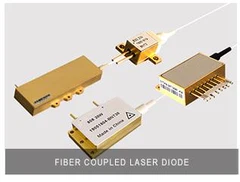
Brandnew can provide the VCSEL in different packages:
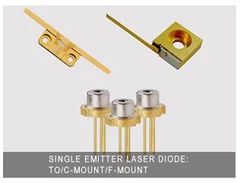
TO package:VCSEL laser diodes in a hermetically sealed TO housing allow easy handling of the laser diode and are suitable for operation in demanding ambient conditions. An additional Z diode protects the laser diode from damage due to electrostatic discharge (ESD). The VCSELs also undergo a burn-in to stabilize the lasers.
SMD Package:VCSEL laser diodes are designed to be surface-mounted onto a printed circuit board (PCB) or another electronic substrate. The SMD packaging allows for easy integration into electronic systems, making them suitable for a variety of applications. BrandNew can supply such as 7060, 3535 SMD package.
VCSEL DIE:Also BrandNew can supply VCSEL die for users. Wavelength: 638nm, 808nm, 850nm, 940nm; Power: From mW level to kW level
Our address
B-1508 Ruiding Mansion,No.200 Zhenhua Rd,Xihu District Hangzhou China
Phone Number
0086-571-8898-7800
info@brandnew-china.com
