

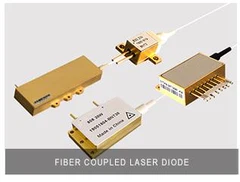
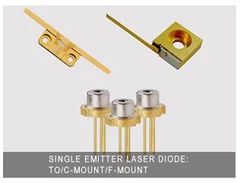


Why Fiber-Coupled Lasers Are Widely Adopted Across Industries?
In the global laser and optoelectronics industry, fiber-coupled laser diodes have grown from a specialized component to a mainstream solution adopted in industrial manufacturing, medical treatment, optical sensing, laser pumping, and aerospace. Compared with free-space lasers, fiber-coupled modules deliver higher stability, flexibility, and integration, making them increasingly popular in high-end applications worldwide. This article explains the core advantages and typical application scenarios of fiber-coupled lasers.
Superior Beam Quality & Stability
Fiber-coupled lasers transmit light inside an optical fiber, effectively isolating the beam from air turbulence, dust, and mechanical vibration. The output beam is more uniform, collimated, and consistent, which greatly improves processing accuracy and repeatability in precision applications.
Flexible Installation & Space-Saving Integration
The optical fiber acts as a flexible light guide, allowing the laser source to be placed remotely while delivering light to narrow or complex working spaces. This flexibility simplifies equipment design and supports miniaturized, modular, and automated systems.
Wide Compatibility & Multi-Scenario Adaptability
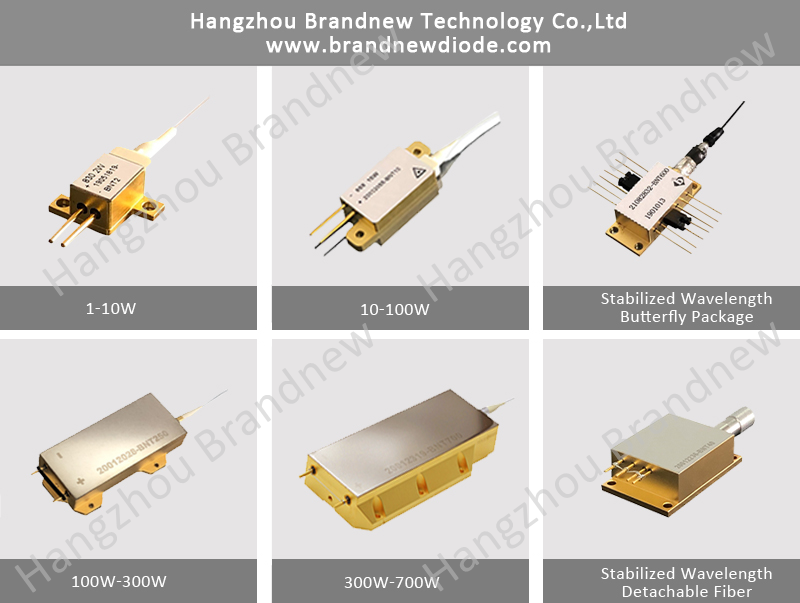
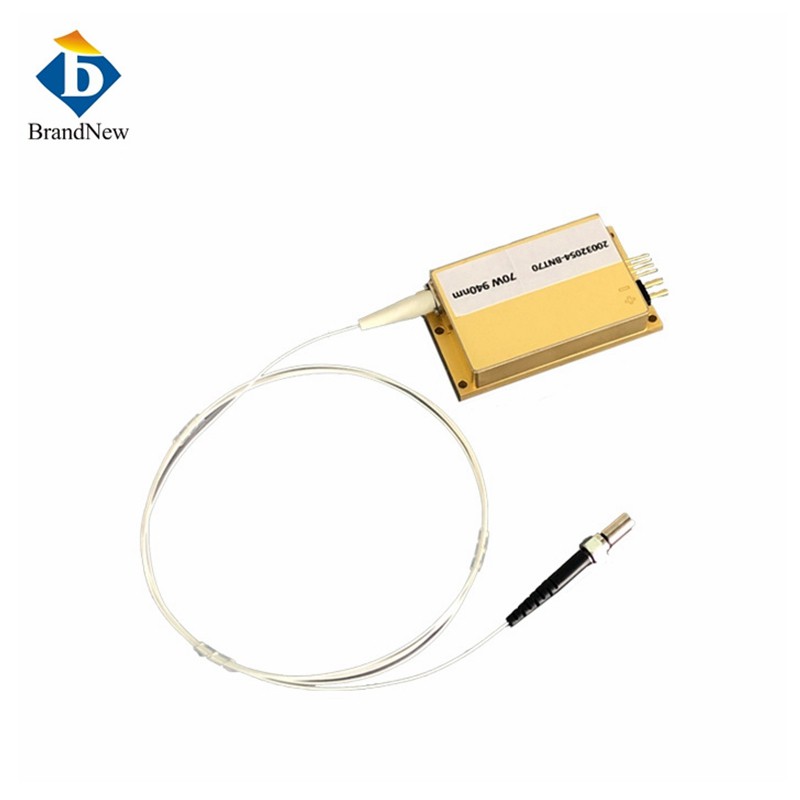
Fiber-coupled lasers support single-mode, multi-mode, and polarization-maintaining outputs, matching wavelengths from visible to near-infrared (such as 450 nm, 520 nm, 635 nm, 808 nm, 980 nm). They can be customized for power, core diameter, numerical aperture (NA), and connector types (FC/PC, SC, SMA905), enabling seamless use across different devices.
Wide Compatibility & Multi-Scenario Adaptability
Fiber-coupled lasers support single-mode, multi-mode, and polarization-maintaining outputs, matching wavelengths from visible to near-infrared (such as 450 nm, 520 nm, 635 nm, 808 nm, 980 nm). They can be customized for power, core diameter, numerical aperture (NA), and connector types (FC/PC, SC, SMA905), enabling seamless use across different devices.
High Safety & Low Maintenance
By confining light inside the fiber, fiber-coupled lasers reduce stray light and potential eye or skin hazards. They also feature better thermal stability and longer service life, lowering maintenance costs in continuous industrial operation.
Mainstream Applications of Fiber-Coupled Lasers
- Industrial processing: Laser soldering, micro-welding, marking, and curing
- Medical equipment: Dermatology, surgery, photodynamic therapy, and dental lasers
- Optical sensing & measurement: LiDAR, fiber sensing, spectroscopy, and analytical instruments
- Laser pumping: Pump source for solid-state lasers, fiber lasers, and ultrafast laser systems
- Scientific research & aerospace: Optical experiments, quantum technology, and aerospace optical systems
Conclusion
Fiber-coupled lasers combine excellent beam quality, flexible layout, high stability, and wide compatibility. As industries pursue higher precision, intelligence, and integration, fiber-coupled laser modules will continue to expand their applications and become an essential component in the global laser supply chain.
Our address
RM1705, Building 2, Aoqiang Mansion, No. 6 Xiyuan 5th Rd,Hangzhou,China
Phone Number
0086-181 5840 0345
wp@brandnew-china.com